Tag Archives: Cumnock Tryst

Cumnock Tryst: Karen Cargill

Trinity Church, Cumnock

In an earlier era – one without, perhaps, the baleful influence of Richard Wagner – it is intriguing to wonder if Robert Schumann might have composed more than one opera. Certainly, in her performance of his song cycle Frauenliebe und Leben, international opera star Karen Cargill suggested a sensibility to create something less epic than the big German Romantic projects he contemplated.

For Cargill, Clara Schumann’s Sechs Lieder, Opus 13 and Robert’s Opus 42 set of eight are both the work of the couple together. This was something of a change to the pre-announced programme to open Sir James MacMillan’s returned long weekend of performances in East Ayrshire. The published brochure lists a showcase for female composers, with Clara followed by Fanny Mendelssohn, Pauline Viardot and Amy Beach.

Only Beach’s Three Browning Songs survived of the others, following the Schumanns with big Broadway renditions that rounded off the recital in grand style. The major loss was of five of Viardot’s Russian songs, in their German translations, which might have been something of a bridge to Cargill’s new Linn disc of French repertoire, Fleur de mon ame, none of which she sang here.

Her partner on the recording, Simon Lepper, was also her foil in Cumnock, the familiar foundation for her first performance in front of an audience in 18 months, something she clearly found an emotional experience.

In that time, as well as releasing that acclaimed recording of Debussy, Duparc and Chausson, the mezzo has been appointed interim head of vocal studies at the Royal Conservatoire of Scotland and the Schumann songs are, as she pointed out, bedrock repertoire for young students. Cargill gave a masterclass in their performance here, alternating power with tenderness, communicating both sequences as narrative arcs of the rewards and pain of love, and persuasively presenting the settings of Chamisso’s popular verse cycle as the answer to the questioning note on which Clara Schumann’s Die stille Lotosblume ends.

This was, beyond argument, a superb way for the Cumnock Tryst to open its return, with Scotland’s major opera star making her debut at the event in an intimate recital a million miles from her high-profile life at the New York Met and elsewhere. If those Beach songs are as new to her as she said, she gave a definitive performance of them just the same, and then encored with a nod to her host in a William Soutar setting by MacMillan. Live-streamed from its first performances, the concert is available via the Tryst website for seven days.

Keith Bruce

Tryst Spreads Its Wings

Sir James MacMillan’s Cumnock Tryst festival is expanding into new venues as well as embracing digital streaming over its four days at the end of September and start of October.

Alongside the usual range of church and other venues – and there are performances at Trinity, St John’s and Cumnock Old Churches as well as in the Town Hall and Dumfries Arms Hotel – the Tryst will this year use the new Barony Campus Hall in the Ayrshire town and the Morphy Richards Engineering Centre on Dumfries House Estate.

The festival runs from September 30 to October 3 and opens on the Thursday evening with the first appearance at the Tryst by Scotland’s star mezzo, Karen Cargill. With Simon Lepper at the piano, she will perform two concerts back-to-back, at 6.45pm and 8.30pm, to allow for maximum audience in a safely-managed environment. Her performance will also be live-streamed and available to watch for seven days.

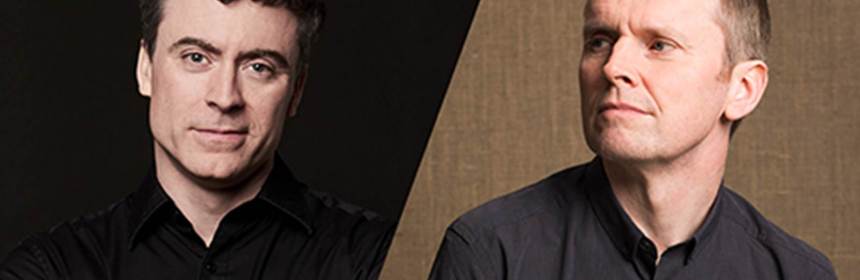
Pianist Steven Osborne returns to the festival, this time in the company of Paul Lewis, to perform a programme of 20thcentury piano duets, mainly by French composers.

The festival’s artist-in-residence is saxophonist Christian Forshaw. He will be joining the singers of Tenebrae in a programme of early music for Passiontide and in a trio with singer Grace Davidson and Libby Burgess at the keyboard, as well as appearing with Sir James MacMillan and the Robert Burns Academy Concert Band in a public workshop entitled Improvise!

That is only one facet of an education programme that also includes the launch, at the Barony Hall, of a new book by MacMillan and Tryst chief executive Jennifer Martin, Creative Composition for the Classroom.

The new venue at Dumfries House Estate will welcome the returning Hebrides Ensemble. Like Cargill and Tenebrae, they are also performing twice, in their case at 2pm and 4.30pm on the Sunday.General booking for this year’s programme opens on Monday August 9. www.thecumnocktryst.com

New Cumnock Partnership

News that Sir James MacMillan has launched a major new initiative to establish Cumnock as a global centre of excellence in the learning and teaching of composition should come as no surprise. 

MacMillan’s preeminent worldwide reputation as a composer, allied to his establishment of the annual Cumnock Tryst Festival, with its formidable record in fostering new compositional talent and associated schools and community initiatives, positions this latest initiative as a bold and natural advancement in the widening impact and influence of his expanding East Ayrshire project.

The new scheme, a partnership between The Cumnock Tryst and Trinity College London, aims to support composers at crucial stages in their development: those just embarking on a career; those teaching composition in schools; and those studying composition either at school or in higher education. 

“It has long been an ambition of mine to take all the experience and learnings we have built over many years of teaching composition in the schools around Cumnock and East Ayrshire and make those available to teachers and students further afield,” said MacMillan, who will be assisted on the ground by fellow composer Jennifer Martin.

The new Tryst-Trinity partnership will kick off this year with a project for Advanced Higher music students at the new Robert Burns Academy in Cumnock, and the launch of a supporting publication for music teachers and young composers, written by MacMillan and Martin, timed to coincide with the 2021 Cumnock Tryst festival in October.

MacMillan, whose new hard-hitting Christmas Oratorio is reviewed this week in VoxCarnyx, added: “The resources we create will not just be focused on teachers, but also support students studying composition at a higher education level or even self-taught. As part of our work to date we have mentored many emerging composers and supported some incredible talent nurtured here in Cumnock, such as Jay Capperauld and Electra Perivolaris, through commissions for our festival.” 

“I really believe that here we have the skills and resources to create an internationally recognised centre of excellence which will benefit the potential composers in the area, but also those around the world.” 

Future Cumnock Trysts are also set to benefit from a substantial new auditorium in the Robert Burns Academy that can seat upwards of 500 people. MacMillan is confident it will become an important venue, not just for the festival, but for performing groups in the community, in schools and from further afield. 

A gala opening was planned for last year’s Cumnock Tryst, featuring the Scottish Chamber Orchestra, but had to be abandoned due to Covid-19. “It is our intention to mark the new space with a celebratory event as soon as we are allowed,” MacMillan promised.

Recent Entries »